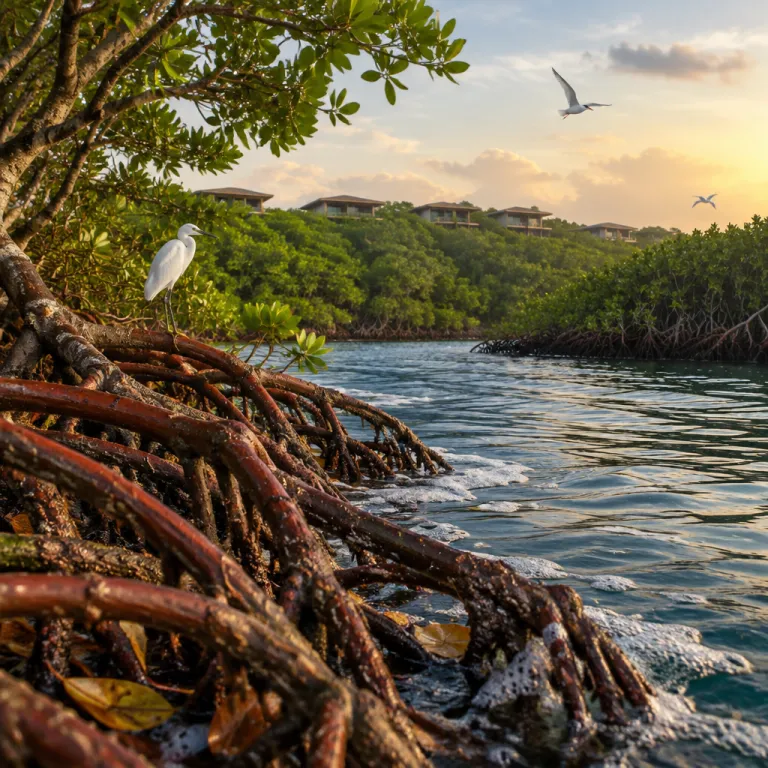
Mayakoba resort sustainability as coastal conservation blueprint
Mayakoba resort sustainability begins with a simple, radical equation. The developers treated the mangrove as essential infrastructure, preserving roughly 80% of the original wetland while threading four five star hotels through the remaining 20%. That figure appears in project descriptions shared with Mexico’s environmental authorities in the mid‑2000s, and in 2019–2023 resort sustainability summaries, which together frame Mayakoba as a long running case study for sustainable tourism in Mexico rather than a one season experiment.
Instead of flatten and build, the central question was how to let water, wildlife and guests coexist on the same site. Engineers mapped tidal flows, carved narrow canals and used them as transport corridors, so guests move by electric boat rather than carving new roads through natural habitat. This slow travel by lagoon takes more time than a shuttle van, yet it provides quiet access to herons, iguanas and the roughly 200 bird species that internal monitoring programs and local birding groups have reported using Mayakoba as preferred habitat rather than encroached territory.
For travelers comparing coastal hotels resorts, Mayakoba’s conservation math contrasts sharply with the older Cancun Hotel Zone. There, many properties pushed right to the sand line, severing dunes from mangrove and leaving the coral reef more exposed to runoff and food waste. Here, environmental management is not a marketing line; it is a design policy that shapes every personal experience, from where your villa sits to how your air conditioning works at night.
This Riviera Maya eco resort model also aligns with international sustainable tourism frameworks such as the GSTC criteria, even if the marketing rarely shouts about certification. Public statements from the UN World Tourism Organization and Mexico’s biodiversity commission CONABIO between 2015 and 2022 reference Mayakoba in the context of coastal planning, and the resort’s Environmental Supervision and Management Program, described in periodic sustainability reports, monitors water quality, invasive species and wildlife corridors across the entire site. That long term process, combined with national environmental law, helps ensure that tourism revenue is earmarked to fund conservation rather than quietly erode it.
For you as a guest, this means your booking request is not just about room category and availability. It is a choice to stay in a Riviera Maya enclave where climate change adaptation, mangrove protection and coral reef health are treated as shared responsibilities. The Mayakoba sustainability approach turns a luxury stay in Mexico into a personal stake in how coastal development can, and should, work, while still inviting you to ask for up to date data and independent verification when you plan your trip.
From Cancun’s flatten and build to Mayakoba’s mangrove first model
To understand Mayakoba resort sustainability, you need to look north toward Cancun. The Hotel Zone grew fast on a narrow sandbar, where many early hotels resorts followed a simple formula: clear the dunes, pour the concrete, then retrofit environmental policy later. That model brought easy access to the beach, but it also accelerated erosion, stressed the coral reef and left little room for natural buffers against storms.
Mayakoba’s site planners chose a different process from the outset, one that many sustainable tourism experts now study closely in case studies and conference sessions. They kept the mangrove as the backbone, set buildings back from the shore and used the existing lagoons as arteries for movement and water management. Instead of a single wall of towers, four distinct brands — Fairmont Mayakoba, Rosewood Mayakoba, Banyan Tree Mayakoba and Andaz Mayakoba — share conservation infrastructure while maintaining their own personal identities.
That shared backbone matters when you look at climate change impacts on the Riviera Maya. Healthy mangroves absorb storm surges, filter water before it reaches the coral reef and provide habitat for fish nurseries and birds. By preserving 80% of the mangrove, the Mayakoba master plan effectively turned green space into insurance, a form of natural capital that will keep protecting guests and buildings long after the latest air conditioning system is replaced.
For parents weighing where to stay, this is more than theory; it shapes safety and experience. If you are comparing options, read about how 89 Cancun properties entered a UN zero waste audit in our guide to picking better Cancun hotels with real sustainability commitments. Then place that context next to Mayakoba’s integrated turtle camp, mangrove refuge and long running Earth Day programs, which provide hands on conservation activities for guests rather than one off photo opportunities.
Regulatory frameworks in Mexico have tightened since the early Cancun days, and Mayakoba’s developers leaned into that shift instead of resisting it. Their sustainable management plans, aligned with GSTC criteria and national environmental law, were provided to authorities as core project documents, not as afterthoughts. Independent academic articles and NGO reports published between 2010 and 2023 often cite Mayakoba alongside other Riviera Maya projects when discussing golf course water use, pesticide management and community employment, so travelers should treat the resort as a relatively strong performer within a region that still faces real environmental tradeoffs.
Guest experience: canals, bird calls and five star comfort
On the ground, Mayakoba resort sustainability feels less like a lecture and more like a quiet soundtrack. You wake to bird calls echoing across the lagoon, then step onto a small dock where a boat captain greets you in English and Spanish before gliding through mangrove tunnels. The ride between Fairmont Mayakoba and Rosewood Mayakoba becomes a moving hide, where your personal checklist of herons, kingfishers and egrets grows with every bend.
Guided bird walks at dawn turn the resort into an open air classroom, with naturalist guides explaining how around 200 bird species use the wildlife corridors that thread between villas and the golf course. Kayak outings trace the same canals that manage storm water, showing how the site’s hydrology was designed to protect both guests and mangrove roots. When you slip into a cenote style pool or paddleboard across a quiet lagoon, you are literally floating on the infrastructure that makes this coastal sustainability model work.
Back in your suite, the luxury details remain firmly five star, yet they are tuned to sustainable management rather than excess. Air conditioning systems are zoned and well insulated, so you can keep the bedroom cool without over chilling the living area, and many rooms use cross ventilation to reduce mechanical cooling time. In room information, provided in both English and Spanish, explains how water is treated on site, how food waste is handled and how guests can request linen changes that balance comfort with conservation.
Dining brings the sustainability story to the table, especially at Ixi’im, the restaurant linked to more than one hundred traditional Mayan ka’anches gardens tended by local communities. Those raised beds provide herbs, chiles and vegetables, shortening the supply chain and turning every plate into a direct line between Riviera Maya soil and your fork. For a broader look at how this philosophy plays out across the country, our guide to luxury eco resorts in Mexico shows how Mayakoba now anchors a wider movement.
Shared amenities knit the four hotels resorts together without diluting their character. You might stay at Banyan Tree Mayakoba for its private pool villas, then boat over to Fairmont Mayakoba for a family friendly beach club, or cross to Rosewood Mayakoba for a quieter spa afternoon. Throughout, the destination’s sustainability framework ensures that every transfer, every activity and every meal is part of a larger process designed to provide access to nature without overwhelming it, even as you remain aware that golf fairways, pools and air conditioning still carry a measurable environmental cost.
Four hotels, one ecosystem: which Mayakoba stay suits you ?
Choosing where to stay inside Mayakoba is a personal decision, and the right match depends on how you like to travel. Fairmont Mayakoba works well for families and groups who want classic resort energy, with multiple pools, a lively beach and easy access to the golf course. Rosewood Mayakoba leans more intimate and residential, ideal for couples or solo travelers who want quiet lagoon suites and attentive, low key service.
Banyan Tree Mayakoba brings a Southeast Asian spa sensibility to the Riviera Maya, with villas that feel like private compounds wrapped in natural vegetation. Many guests choose it for wellness focused stays, where yoga platforms, hydrotherapy circuits and in villa dining make leaving the site feel almost optional. Andaz Mayakoba, the youngest sibling, offers a more contemporary, art forward take, appealing to design minded travelers who want color, music and a slightly more casual policy around dress codes and poolside atmosphere.
Across all four, Mayakoba resort sustainability provides a common framework that shapes operations behind the scenes. Waste sorting, food waste reduction and water treatment happen at shared facilities, so your choice of brand does not change the environmental baseline. The turtle camp, Earth Day activities and many conservation tours are open to guests from every property, turning the entire site into one extended classroom for sustainable tourism in Mexico.
Transport between hotels follows the same gentle rhythm, with boats and bicycles preferred over vans whenever possible. You can request a boat from your concierge at Fairmont Mayakoba, then glide past Rosewood Mayakoba and Banyan Tree Mayakoba on the way to a dinner reservation, watching tree branches arch over the canal. That slow movement reinforces the idea that this is one ecosystem, not four isolated hotels resorts competing for attention.
For readers of MyMexicoStay, the practical takeaway is clear: pick the brand that matches your style, then relax knowing the sustainability process is shared. If you want to go deeper into Mexico’s high end hospitality scene, our feature on how Mexico’s original design forward hoteliers reinvent the lobby shows how urban properties are now borrowing lessons from places like Mayakoba. In both city and coast, the new luxury benchmark is not just thread count, but how convincingly a property can provide comfort while keeping its environmental footprint in check.
Behind the scenes: management, metrics and what guests can do
Mayakoba resort sustainability does not run on good intentions alone; it relies on data, policy and constant adjustment. The Environmental Supervision and Management Program tracks indicators such as water quality, wildlife sightings and waste volumes across the entire site. Those data feed into sustainable management plans that align with GSTC criteria and national regulations, giving the resort a clear roadmap rather than vague aspirations.
On Earth Day, those usually invisible systems step into the spotlight through guest activities and staff led tours. You might visit the turtle camp to see how nests are monitored and protected, or walk through restoration plots where native species like the chicozapote tree are replanted after any construction. These experiences provide a tangible context for conversations about climate change, coral reef health and the role of coastal tourism in Mexico’s long term environmental strategy.
Food waste is another quiet frontier where the resort’s sustainability work shows up in daily operations. Kitchens across Fairmont Mayakoba, Rosewood Mayakoba, Banyan Tree Mayakoba and Andaz track portions, repurpose surplus ingredients and work with local communities to channel safe leftovers into social programs. For guests, simple choices — ordering what you will actually eat, asking how the chef handles trimmings, supporting menus that highlight seasonal produce — help reinforce that process.
Energy use remains a critical piece, especially in a humid climate where air conditioning can dominate consumption. Many rooms are equipped with sensors that adjust cooling when doors are open, and staff are trained to explain how these systems provide comfort while cutting unnecessary load. Golf course irrigation and landscaping still require significant water and fertilizer, according to regional studies published up to 2023, so asking how Mayakoba manages reclaimed water, native plants and chemical inputs is a reasonable part of any sustainability focused conversation with staff.
For travelers who care about sustainable tourism, the most powerful step is to ask informed questions at booking time. Ask how the site manages water, how often sustainability reports are provided and whether policies are independently audited, then reward transparent answers with your reservation. As one internal FAQ for guests puts it plainly, “What is Mayakoba? A luxury resort community in Mexico's Riviera Maya emphasizing environmental conservation.”
FAQ
What is Mayakoba and where is it located ?
Mayakoba is a master planned luxury resort community on the Riviera Maya, just north of Playa del Carmen in Quintana Roo, Mexico. It sits between the coastal highway and the Caribbean Sea, on a site of mangroves, lagoons and low forest. Four five star hotels share this landscape while operating under a unified sustainability framework.
How many bird species and hotels are in Mayakoba ?
Approximately 200 bird species have been recorded within Mayakoba’s preserved mangroves and lagoons, according to long running bird monitoring efforts cited in resort materials and local birding reports through 2023. The development currently hosts four five star hotels — Fairmont Mayakoba, Rosewood Mayakoba, Banyan Tree Mayakoba and Andaz Mayakoba. All four properties participate in shared conservation programs and environmental monitoring.
What makes Mayakoba resort sustainability different from other coastal resorts ?
Mayakoba preserved around 80% of its original mangrove ecosystem and designed buildings around existing water bodies instead of replacing them. Guests move largely by boat and bicycle, and the site uses centralized systems for water treatment, waste management and habitat protection. This integrated approach contrasts with older coastal developments that cleared dunes and wetlands before building.
Can guests participate in conservation activities during their stay ?
Yes, guests can join bird watching walks, mangrove and canal tours, and seasonal programs such as turtle camp releases when conditions allow. Many properties offer Earth Day events and educational talks about coral reef health, climate change and local communities. These activities are designed to be engaging while also supporting ongoing monitoring and protection work.
Which Mayakoba hotel is best for solo travelers focused on sustainability ?
Solo travelers who prioritize sustainability often gravitate toward Rosewood Mayakoba for its calm atmosphere or Banyan Tree Mayakoba for its wellness focus. Both offer strong access to nature based activities and staff who can arrange tailored conservation experiences. That said, every hotel in Mayakoba operates within the same sustainability framework, so you will find robust environmental practices whichever brand you choose.